Goethe Yearbook 22 (2015)

Articles:

Special Section on Goethe and Environmentalism edited by Dalia Nassar and Luke Fischer

  1. Luke Fisher and Dalia Nassar, “Introduction: Goethe and Environmentalism.” 3-22.
  2. Kate Rigby, “Art, Nature, and the Poesy of Plants in the Goethezeit: A Biosemiotic Perspective.” 23-44.
  3. Frederick Amrine, “The Music of the Organism: Uexküll, Merleau-Ponty, Zuckerkandl, and Deleuze as Goethean Ecologists in Search of a New Paradigm.” 45-72.
  4. Ryan Feigenbaum, “Toward a Nonanthropocentric Vision of Nature: Goethe’s Discovery of the Intermaxillary Bone.” 73-94.
  5. Jason Groves, “Goethe’s Petrofiction: Reading the Wanderjahre in the Anthropocene.” 95-114.
  6. Heather I. Sullivan, “Nature and the ‘Dark Pastoral’ in Goethe’s Werther.” 115-132.
  7. Gernot Böhme, “Goethe und die moderne Zivilisation.” 133-142.____________________________________
  8. Iris Hennigfeld, “Goethe’s Phenomenological Way of Thinking and the Urphänomen.” 143-168.
  9. Stephanie M. Hilger, “Orientation and Supplementation: Locating the ‘Hermaphrodite’ in the Encyclopédie.” 169-188.
  10. David Hill, “Claudine von Villa Bella and the Publication of ‘Nähe des Geliebten.’ 189-202.
  11. Daniel Purdy, “West-östliche Divan and the ‘Abduction/Seduction of Europe’: World Literature and the Circulation of Culture.” 203-226.Helmut J. Schneider, Kunstsammlung und Kunstgeselligkeit: Zu Goethes Sammlungs- und Museumskonzeption zwischen 1798 und 1817.” 227-246.
  12. Inge Stephan, “‘Er hatte einen entschiedenen Hang zur Intrige’: Überlegungen zu J. M. R. Lenz, seiner Rezeption und seinen Werken.” 247-260.
Review Essay:
  1. Johann Wolfgang Goethe, Amtliche Schriften. Teil I, Geheimes Consilium und andere bis zur Italienreise unternommene Aufgabengebiete. Ed. Reinhard Kluge. Frankfurt/Main: Deutscher Klassiker Verlag, 1998. 917 pp., 9 ill. (Johann Wolfgang Goethe, Sämtliche Werke: Briefe, Tagebücher und Gespräche. Ed. Friedmar Apel et al. Frankfurter Ausgabe 26.) Teil II, Aufgabengebiete seit der Rückkehr aus Italien. Ed. Irmtraut und Gerhard Schmid. FA 27. Frankfurt/Main: Deutscher Klassiker Verlag, 1999. 1238 pp., 15 ill. Kommentar zu den Amtlichen Schriften. Vol. 1. Ed. Reinhard Kluge. FA 26K. Berlin: Deutscher Klassiker Verlag, 2011. 667 pp., 11 ill. Kommentar zu den Amtlichen Schriften. Vol. 2. Ed. Gerhard und Irmtraut Schmid. FA 27K. Berlin: Deutscher Klassiker Verlag, 2011. 1425 pp., 9 ill. Register und Verzeichnisse. Ed. Reinhard Kluge, Gerhard Schmid, and Irmtraut Schmid. FA 26/27R (CD-ROM). Berlin: Deutscher Klassiker Verlag, 2011. 355 pp. (W. Daniel Wilson). 261-268.
Book Reviews:
  1. Manfred Wenzel, ed., Goethe Handbuch. Supplemente 2, Naturwissenschaften. Stuttgart: J. B. Metzler, 2012. 851 pp. (Astrida Orle Tantillo). 269.
  2. Heinz Haertl, Hrsg., Die Wahlverwandtschaften: Eine Dokumentation der Wirkung von Goethes Roman, 1808–1832. Reprint der Erstausgabe mit neuen Funden als Anhang und mit Vorwort von Jochen Golz. Schriften der Goethe-Gesellschaft, Bd. 76, hrsg. von Jochen Golz. Göttingen: Wallstein, 2013. 563 S., 17 Abbildungen. (Ehrhard Bahr). 270.
  3. Katharina Mommsen, Goethe und der Alte Fritz. Leipzig: Lehmstedt, 2012. 231 S. (Walter Tschacher). 271.
  4. Christian P. Weber, Die Logik der Lyrik: Goethes Phänomenologie des Geistes in Gedichten. Teil 1, Die Genese des Genies. Freiburg i.Br.: Rombach, 2013. 486 pp. (Martin Baeumel). 273.
  5. Carsten Rohde and Thorsten Valk, eds., Goethes Liebeslyrik: Semantiken der Leidenschaft um 1800. Berlin: Walter de Gruyter, 2013. 404 pp. (Christian P. Weber). 275.
  6. Gabrielle Bersier, Wege des Heilens: Goethes physiologische Autobiographie Dichtung und Wahrheit. Würzburg: Königshausen und Neumann, 2014. 253 pp. (James F. Howell). 279.
  7. Daniel Wilson, Goethe Männer Knaben: Ansichten zur “Homosexualität.” Trans. Angela Steidele. Berlin: Insel, 2012. 503 pp., 41 ills. (Robert D. Tobin). 280.
  8. Pamela Currie, Goethe’s Visual World. Germanic Literatures 3. London: Legenda, 2013. 166 pp. (Walter K. Stewart). 284.
  9. Michael Mandelartz, Goethe, Kleist: Literatur, Politik und Wissenschaft um 1800. Berlin: Erich Schmidt, 2011. 465 pp. (Gabrielle Bersier). 286.
  10. Mattias Pirholt, Metamimesis: Imitation in Goethe’s Wilhelm Meisters Lehrjahre and Early German Romanticism. Rochester, NY: Camden House, 2012. 220 pp. (John B. Lyon). 287.
  11. Jo Tudor, Sound and Sense: Music and Musical Metaphor in the Thought and Writing of Goethe and His Age. Oxford: Peter Lang, 2011. xvi + 515 pp. (Lorraine Byrne Bodley). 289.
  12. Elisabeth Krimmer and Patricia Anne Simpson, eds., Religion, Reason, and Culture in the Age of Goethe. Studies in German Literature, Linguistics, and Culture. Rochester, NY: Camden House, 2013. 269 pp. (Christopher R. Clason). 291.
  13. Simon Richter and Richard Block, eds., Goethe’s Ghosts: Reading and the Persistence of Literature. Rochester, NY: Camden House, 2013. 315 pp., 7 ills. (Lauren J. Brooks). 294.
  14. Eckart Goebel, Beyond Discontent: “Sublimation” from Goethe to Lacan. Trans. James C. Wagner. New York: Continuum International Publishing Group, 2013. xiv + 259 pp. (Thomas L. Cooksey). 296.
  15. Eric Achermann, ed., Johann Christoph Gottsched (1700–1766): Philosophie, Poetik und Wissenschaft. Werkprofile: Philosophen und Literaten des 17. und 18. Jahrhunderts. Berlin: Akademie Verlag, 2014. 467 pp. (Seth Berk). 298.
  16. Steven D. Martinson, Projects of Enlightenment: The Work of Gotthold Ephraim Lessing; Cultural, Intercultural, and Transcultural Perspectives. Heidelberg: Synchron, 2013. 286 pp. (Jonathan Blake Fine). 299.
  17. Lisa Marie Anderson, ed., Hamann and the Tradition. Evanston, IL: Northwestern UP, 2012. xiii + 211 pp. (Elizabeth Powers). 301.
  18. Kenneth S. Calhoon, Affecting Grace: Theater, Subject, and the Shakespearean Paradox in German Literature from Lessing to Kleist. Toronto: Toronto UP, 2013. xii + 269 pp., 12 ills. (Jocelyne Kolb). 304.
  19. Elliott Schreiber, The Topography of Modernity: Karl Philipp Moritz and the Space of Autonomy. Signale: Modern German Letters, Cultures, and Thought. Ithaca, NY: Cornell UP, 2012. 179 pp. (Cord-Friedrich Berghahn). 306.
  20. Vicki A. Spencer, Herder’s Political Thought: A Study of Language, Culture, and Community. Toronto: Toronto UP, 2012. xi + 354 pp. (Rachel Zuckert). 310.
  21. Hans Adler and Lynn L. Wolff, eds., Aisthesis und Noesis: Zwei Erkenntisformen vom 18. Jahrhundert bis zur Gegenwart. Munich: Wilhelm Finck, 2013. 202 S. (Beate Allert). 311.
  22. Dalia Nassar, The Romantic Absolute: Being and Knowing in Early German Romantic Philosophy, 1795–1804. Chicago: University of Chicago Press, 2014. 360 pp. (Gabriel Trop). 313.
  23. Peter Goßens, Weltliteratur: Modelle transnationaler Literaturwahrnehmung im 19. Jahrhundert. Stuttgart: J. B. Metzler, 2011. xiii + 457 pp. (Elizabeth Powers). 316.
  24. John Walker, ed., The Present Word: Culture, Society and the Site of Literature; Essays in Honour of Nicholas Boyle. London: Legenda, for Modern Humanities Research Association and Maney Publishing, 2013. xii + 204 pp. (Arnd Bohm). 318.
From the President

“Das Gebildete wird sogleich wieder umgebildet, und wir haben uns, wenn wir einigermaßen zum lebendigen Anschaun der Natur gelangen wollen, selbst so beweglich und bildsam zu erhalten, nach dem Beispiele mit dem sie uns vorgeht.”Over the coming months, we will be seeing a number of changes: we will be selecting new officers and a new book series editor; inaugurating a new prize to promote research on Goethean science; and convening a new GSA Seminar on “Science, Nature, and Art.” The following record of the Society’s recent events and activities suggests the challenge of change for our organization should be understood, in true Goethean fashion, as part of a process of transformation that flexibly adapts the past and keeps it moving into the future.

2014 Atkins Conference at the University of Pittsburgh

For those who were unable to attend the conference, I would like to begin my summary with two announcements that I made during our Annual Business Meeting in Pittsburgh.Our Essay Prize for 2013 was awarded to Professor Patricia Simpson for her article “Sacred Maternity and Secular Sons: Hölderlin’s Madonna as Muse.” Read Daniel Purdy’s laudatio below. Congratulations on your accomplishment, Patty, and many thanks to Daniel Purdy and the other two judges, Peter Höyng and Gail Hart, for their hours of work.I was also extremely pleased to announce the establishment of a new prize that has been made possible through the generosity of one of our most dedicated and active members, Dr. Elizabeth M. Powers. Further details will be worked out over the coming months, but the Richard Sussman Memorial Prize, named to honor Elizabeth’s late husband, will promote research on Goethe’s scientific writings and activities, including his correspondence and contacts with important figures in the scientific community of his day.Thank you again, Elizabeth. We are touched by your generous support and the trust you have placed in the Society to further knowledge in fields that were very dear to Richard and you.Here is a record of our four days in Pittsburgh last October:

  • About eighty-five people attended the conference from across the United States and five European countries.
  • Generous financial and material support was provided by the following individuals, institutions, and organizations: Mr. Stuart Atkins (who has endowed the conference since 2011 in honor of his parents, Lillian and Stuart P. Atkins; the Max Kade Foundation (New York); the Andy Warhol Museum (Pittsburgh); the Kenneth P. Dietrich School of Arts & Sciences, the Humanities Center, the University Library and the Department of Special Collections, and the Departments of English and German (all of the University of Pittsburgh).
  • Twenty panels were organized.
  • The panels included fifty-seven presentations on the conference topic: “Aesthetics and its Institutions During the Age of Goethe.”
  • A lively Presidential Forum, with talks by Ellis Dye, Simon Richter, and Astrida Tantillo, addressed issues around Goethe and the humanities today.
  • Two keynote addresses were offered by Jane K. Brown (University of Washington, Seattle) and Anne-Bohnenkamp Renken (Freies Deutsches Hochstift). Both speakers were honored with lifetime memberships in the Society. The title of Jane Brown’s address was “Building Bridges: Goethe’s Fairy-Tale Aesthetics.” Anne Bohnenkamp-Renken’s address was entitled “Mignon—Suleika—Helena: Museale Erkenntnis.”
  • In addition to an opening reception, we held a reception for an exhibition of rare books, manuscripts, and other Goetheana in the University Library that more than fifty participants attended. The title of the exhibition was “Reading Goethe: The Most Composite of all Creatures.” A separate catalogue is being prepared.
  • Our last public event was the banquet at the Andy Warhol Museum. All seven floors of the museum were opened exclusively to conference participants. In addition to an original animation based on Faust that was commissioned for the event, the museum displayed all four of Andy Warhol’s Goethe serigraphs. Following dinner, the museum’s chief archivist spoke about these works and answered questions.
  • Daniel Purdy organized two dissertation workshops with five graduate students for Sunday morning. Congratulations to the students who were chosen to participate: Mathew Birkhold (Princeton University); Lauren Nossett (University of California, Davis); Daniel Di Mossa (University of Pennsylvania); Jonathan Blake Fine (University of California, Irvine); and Joseph Rockelmann (Purdue University). Thanks also to the faculty who responded with comments and questions: John Noyes (University of Toronto); Daniel Purdy (Pennsylvania State University); John Smith (University of California Irvine); Thomas Beebee (Pennsylvania State University); Catriona MacLeod (University of Pennsylvania); and Fritz Breithaupt (Indiana University).
  • In addition to our Vice-President, I would also like to acknowledge and thank many times over our other officers, whose tireless work over the past two years made the conference possible. They include our Directors Heather Sullivan (Trinity University) and Horst Lange (University of Central Arkansas), who spent countless hours with me on the program; our Secretary-Treasurer Claire Baldwin (Hamilton College), who kept our finances and registrations in order; our Webmaster and Newsletter Editor Burkhard Henke (Davidson), who designed and managed the conference website and facilitated all of our communications; and our Executive Secretary Karin Schutjer (University of Oklahoma), who was always available with advice when we needed it and helped make things work when they were broken.

Two people at my own University, whom most will not know, deserve special mention. Thank you Alana (Dunn) and Samantha (Shipeck) for your dedication and skill in making the event happen.With just thirty months now left until the next Atkins Conference, I want to extend my best wishes to Daniel Purdy, who will be organizing our tri-annual gathering in the Fall of 2017. Please mark your calendars. I’m certain your ideas and suggestions will be welcome, as will be your participation. Good luck, Daniel!

Elections and Nominations

We are now in the process of organizing our next election and appointing a successor to Jane Brown as editor of our book series. Let me therefore remind you to make your nominations by April 1.

International Initiatives

Over the coming years, I would like our Society to find ways to cooperate with Goethe institutions abroad on a more regular basis. I will therefore renew conversations at the end of May with members of the Vorstand of the Goethe-Gesellschaft in Weimar. At the top of my list of topics will be joint membership options for our societies and jointly organized Studienaufenhalte in Weimar/Jena. Following my stay in Weimar, I will be at the Freies Deutsches Hochstift in Frankfurt, where I will explore additional possibilities for cooperation, including jointly sponsored conferences and research projects.To assist me in these exploratory conversations, I would ask interested members to send me their ideas and comments. And if you have professional contacts with colleagues who are active in organizations abroad, please let me know.I will update you on these conversations in my final column as President next fall, as well as at our Annual Business Meeting, which will take place at the German Studies Association in Washington, D.C. in October.

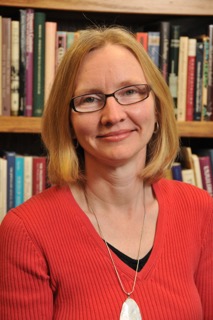
Clark MuenzerUniversity of Pittsburgh

From the Executive Secretary

We are soliciting panel proposals for the next ASECS meeting March 29-April 3, 2016 in Pittsburgh. Please send me a brief topic description. The deadline has been extended until April 1, 2015.If you are going to be at this year’s GSA in Washington, DC, please plan on joining us for our annual business meeting and cash bar, where we’ll be saying a fond farewell to many of our current officers and announcing incoming ones.

Karin SchutjerUniversity of Oklahoma